Responsible Gambling Tools, Warning Signs and Limits
Gambling carries real financial risk, and a slot spin resolves in seconds, so limits belong in place before the first one. This page lists the limits a licensed operator lets you set, the warning signs that matter, how self-exclusion works both at a single casino and across a national register, and what the house keeps at each of the five certified returns this title ships with. One thing this page does not do is print a helpline number, because we have not been able to verify one for this market in a primary source, and an unverified number on a page like this would be worse than none. Everything here is written for adults aged 18 years or over, and every casino game keeps a share of the stakes it takes.
- Age rule
- Adults aged 18 or over, or older where local law says so
- Limits to set first
- 3: deposit, loss and session
- Self-exclusion
- At your operator, and through a national register
- What the house keeps
- Between 3.79% and 15.82%, depending on the version run
- What this site is
- An information service, never an operator
Table of contents
- Limits to Set Before the First Spin
- Where Those Limits Live in an Account
- Self-Exclusion Beyond Simple Limits
- Warning Signs Worth Taking Seriously
- Why the House Edge Means Loss
- Where to Find Help
- Age Rules and Under-18 Reporting
- Our Disclosure and What This Site Is Not
- Recap: Limits, Signs and Self-Exclusion
Limits to Set Before the First Spin
Limits work only when they are set in advance. Decide a deposit limit, a loss limit and a time limit before you open the game, then stop the moment you reach any of them.
A spin is over in seconds, and 10 of them can pass before a second thought. Whichever certified version an operator has chosen to run, the house still keeps a slice of every one.
In Short, Set Your Limits First
Here's the one thing worth taking from this page: it's the deposit limit that does the heavy lifting. Set it before you play and you've already removed the decision you'd otherwise make while losing.
A loss limit helps too, but it only triggers once the money is already in the account. That is exactly why the order of these two limits matters.
What Should You Set Before You Start?
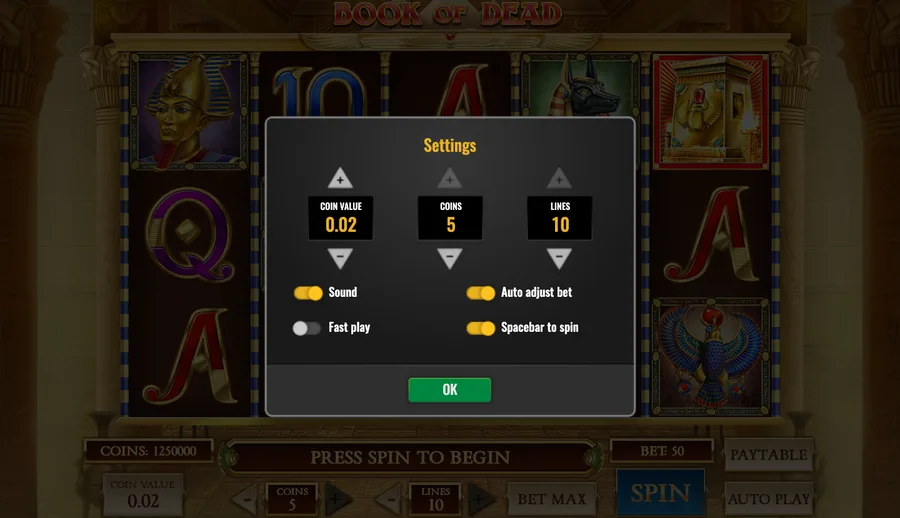
Three settings are worth putting in place before you start, and every licensed casino makes them available inside the account. Browse the responsible gambling section of your operator, then read how its self-exclusion works before you need it.
- Set a deposit limit for the day, the week or the month ahead.
- Set a loss limit that stops play once the money is genuinely gone.
- Set a session reminder so a long night cannot pass unnoticed.
- Tell one person you trust what your current limits are.
A limit set in advance resists an impulse that a private promise never survives. The range of tools below exists because one setting alone rarely holds.
Where Those Limits Live in an Account
Your deposit and loss limits live in the account. Set there, they resist an impulse far better. They sit in the operator account, in the responsible gambling or limits section. Licensed casinos provide deposit, loss and session limits plus self-exclusion, and a limit set there resists being raised on impulse.
| Limit | What it does | Where to set it |
|---|---|---|
| Deposit limit | Caps the money that can enter the account per day, week or month | Operator account, responsible gambling or limits section |
| Loss limit | Stops play once net losses reach a set amount in the period | Operator account, where the licence requires it |
| Session or time limit | Logs you out or warns you after a set number of minutes | Operator account, or the reality-check setting in the client |
| Cool-off and self-exclusion | Locks the account for a chosen period, from days to years | Operator account, and a national register that covers every licensed operator at once |
The guides on Book of Dead carry the same advice beside the strategy itself. Set all 3 before a bonus tempts you into a longer session.
Self-Exclusion Beyond Simple Limits
Self-exclusion goes beyond a limit, because it removes the choice for a set period. An operator can lock a single account, and that is useful, though it reaches exactly one casino out of the dozens licensed in a market.
A national register is the wider instrument. Italy keeps a single register of self-excluded players, held by the gambling regulator, and every licensed operator is required to check it, so one registration reaches the whole licensed market rather than one brand.
Compared to a national register, an operator tool is narrow: most licensed operators offer cool-off periods of 24 hours or more inside the account, and other casinos stay open throughout. A device block adds a delay instead of a cure, and a delay is often enough.
Pair a device block with a national self-exclusion, then tell one person you trust. The 3 together are far harder to undo than any single one of them.
What Each Tool Covers
Each tool below covers a different reach, so the table sets them beside one another. None of them charges a player anything at all.
| Tool | What it offers | Where it reaches |
|---|---|---|
| Account limits | Deposit, loss and session caps you set yourself | The one operator holding the account |
| Operator self-exclusion | A lock on the account for a period you choose | That brand, and sometimes others on the same platform |
| National self-exclusion register | One registration that every licensed operator must honour | The whole licensed market in that country |
| Device or software block | Blocks gambling sites at the device level | One phone or computer, licensed or not |
4 Types of Block, Compared by Limits
Blocking tools have limits of their own, and the scope of each one decides how much it can protect you. A tool reaches only the accounts it knows about.
| Tool | What it blocks | What it leaves open |
|---|---|---|
| Operator cool-off | One account, for 24 hours or longer | Every other casino you hold an account with |
| Operator self-exclusion | One account, for months or years | Casinos outside that brand |
| National register | Accounts at every operator licensed in that market | Any site operating without that licence |
| Device or software block | Gambling sites on one phone or computer | Any other device you can reach |
Warning Signs Worth Taking Seriously
Two signs together are enough. Learn the warning signs before a session rather than after one. They are worth memorising while nothing is at stake. Chasing losses, betting money you need for essentials, hiding the amount you play, borrowing to gamble, or playing to escape a bad mood are the common ones, and two of them together are a reason to stop for the day.
The signs are easier to spot in someone else than in yourself, which is why telling one person your limits works better than any private resolution.
- Chasing a loss with a bigger bet, or with a second deposit in the same session.
- Gambling with money set aside for rent, food, bills or debt repayments.
- Hiding play from family, or understating the amount lost.
- Feeling restless or irritable away from gambling, or gambling to escape.
- Borrowing, selling possessions or taking credit to keep playing.
Why the House Edge Means Loss
The house edge is what decides the long run for every player, and it is the reason a long session ends in a loss. Every casino game hands back less than it takes, a published return is a long-run average across millions of spins, and the house keeps the difference.
This title makes that point unusually well, because the studio certifies five different versions of it and lets the casino pick. A game returning 96.21% keeps a small slice. The same game, same artwork, same feature, keeps four times as much at 84.18%.
The reference pages explain the figures this game ships with. The honest reading is that gambling is paid entertainment instead of income.
What the House Keeps at Each Certified Return
What the house keeps follows from the return, and the arithmetic is simply 100 minus that figure. Every version below is one the studio certifies and an operator may run under the same name, so the choice belongs to the casino rather than to you.
| Certified return | What the house keeps | What that means over a long run |
|---|---|---|
| 96.21%, the default version | 3.79% of every stake | The kindest version, and still a loss over time |
| 94.25%, run by at least two Italian operators | 5.75% of every stake | Roughly half as much again kept, under identical artwork |
| 84.18%, the lowest certified version | 15.82% of every stake | More than four times the default, and nothing on screen would tell you |
Where to Find Help
Help exists, and it is free, but this page will not hand you a phone number it has not checked. We print a helpline only when we have read it in a primary source, and for this market we have not yet been able to: the national health sites that publish it refuse automated access, so anything we typed here would be a number we remembered rather than one we verified.
What we can point you to with confidence is structural. Your own operator is required to publish its responsible gambling page, its limit tools and its self-exclusion route, and the regulator that licenses it publishes the national self-exclusion register alongside its list of licensed operators. Both are one click from any operator page on this site, because every one of them prints the concession number and the register it was checked in.
That is a real gap in this page, and naming it is better than filling it badly. When a helpline is confirmed in an official source, it will appear here and in the footer of every page.
Age Rules and Under-18 Reporting
Age rules here are absolute. They are simple, and they are non-negotiable. Nothing on Book of Dead is meant for anyone under 18, or under the higher age a local law may set.
Every operator listed here requires identity verification before a withdrawal, which is one reason the identity checks described on the operator pages exist. Gambling with borrowed money, with money needed for essentials, while drunk, or while trying to recover a loss is a bad idea at any age.
The free demo carries none of that financial risk, and it is the only mode we recommend for learning the game. Parents and guardians can add a device-level block for gambling sites, while a licensed operator must refuse an account that fails an age check.
If a minor has used an adult account, the operator support channel and the regulator named on the operator page are the 2 places to report it. Avoid handling it privately with the operator alone.
Terms This Page Uses
- Deposit limit
- A cap on the money that can enter an operator account in a day, a week or a month, set inside the account tools.
- Self-exclusion
- A block that locks an account for a chosen period, from days to years, and resists being lifted early.
- National register
- A single list of self-excluded players held by the regulator, which every licensed operator in that market must check.
- House edge
- The share of all stakes a casino keeps over the long run, which is 100% minus the certified return the operator has chosen to run.
Our Disclosure and What This Site Is Not
One disclosure covers this site, and here it is. Book of Dead is an independent information service instead of a gambling operator, and it may earn a commission from links to licensed casinos, which leaves a rating or a verdict untouched; the terms of use and about page set that out in full.
We run no accounts, see none of what you deposit, and can set no limit on your behalf. Only the operator account tools and the national register above can do that, while the editors can only point you towards them. Read how we test it to see why every score comes out of the free demo.
Which Limits This Site Cannot Set?
The complete list of who can set your limits has one name on it: the operator holding your account. This site can do very little about one, and saying so plainly matters more than sounding helpful.
| Request | Who handles it |
|---|---|
| Set a deposit, loss or session limit | Your operator, inside the account tools |
| Close or lock an account | Your operator, or the national self-exclusion register |
| Release or reverse a payment | Your operator, and its regulator if they refuse |
| Correct a figure on a page here | The editors, through the contact page |
Does a Deposit Limit Really Hold?
A deposit limit holds because the operator enforces it, and a licence usually forces a waiting period before that ceiling moves upward again.
Readers should still expect a prompt to lift it one day. They keep the limit by leaving that prompt alone, which is far easier when the limit went on before the first spin.
Recap: Limits, Signs and Self-Exclusion
If a warning sign on this page describes you, stop for the day and talk to someone. To recap: set the 3 limits before the first spin, learn the warning signs, use self-exclusion when a limit is not enough, and remember that the house keeps between 3.79% and 15.82% of every stake depending on a version choice you cannot see.
Your operator and its regulator hold the tools that actually work, and both are named on every operator page here. This site is meant for adults only, and the bar stays at 18 years or the higher local age.
Deposits and identity checks stay on the operator's own secure site.
Related Reading on This Game
More on this game, from the same section first: